Gutter Replacement in Jacksonville, FL
Gutter Replacement in Jacksonville, FL
Replace leaking, sagging, or storm-damaged gutters with a properly planned new system — old gutters removed, fascia checked, and new runs installed with correct slope and drainage.
Repair vs. Replacement
Gutters rarely fail all at once. They give warnings first: a seam that drips, a section that sags after storms, fasteners scattered in the mulch. Spot repairs make sense when the rest of the system is sound. But when problems show up in several places at once, each repair buys less time, and replacement becomes the more practical investment.
A new system also resets the drainage plan. Replacement is an opportunity to fix design problems the original installation created — too few downspouts, outlets in the wrong places, undersized gutters under heavy roof valleys — rather than simply reproducing them with new metal.
Signs Your Gutters Need Replacement
Most failing systems show several of these signs together. Any one of them is worth a closer look; three or more usually means the system is near the end of its useful life.
- Sagging sections that no longer hold a consistent slope toward an outlet.
- Separated sections, corners, or end caps that open up during rain.
- Poor drainage or water pooling near the foundation after storms.
- Persistent leaks at seams, corners, or outlets, even after resealing.
- Water running behind the gutter and staining the fascia or siding.
- Damaged or softened fascia where hangers can no longer hold securely.
- Overflow during ordinary or heavy rain despite reasonably clear gutters.
- Improper slope that leaves standing water in a run.
- Repeated repair needs across several parts of the system.
What Causes Gutters to Fail in Jacksonville
Heavy rain is the obvious stress, but it is rarely the root cause. More often, failure starts with installation details: hangers spaced too far apart to carry the weight of stormwater, runs installed level so water sits instead of flowing, and sealant joints that break down under years of sun exposure.
Debris accelerates everything. Leaves and pine needles hold moisture against the metal, add weight that strains hangers, and clog outlets until water spills over the edge. In shaded neighborhoods like Mandarin and Fruit Cove, a clogged system can stay damp for days, which speeds corrosion and rots the fascia behind it.
Storms finish the job. Wind-driven rain tests every weak joint, and tropical weather can load a compromised system with more water than it was ever going to survive.
How the Replacement Process Works
We start by reviewing the existing system and the problems you have noticed, then examine the roofline, fascia, and current downspout locations. If parts of the system are still sound, we will tell you — targeted replacement of a failed run is sometimes all a home needs.
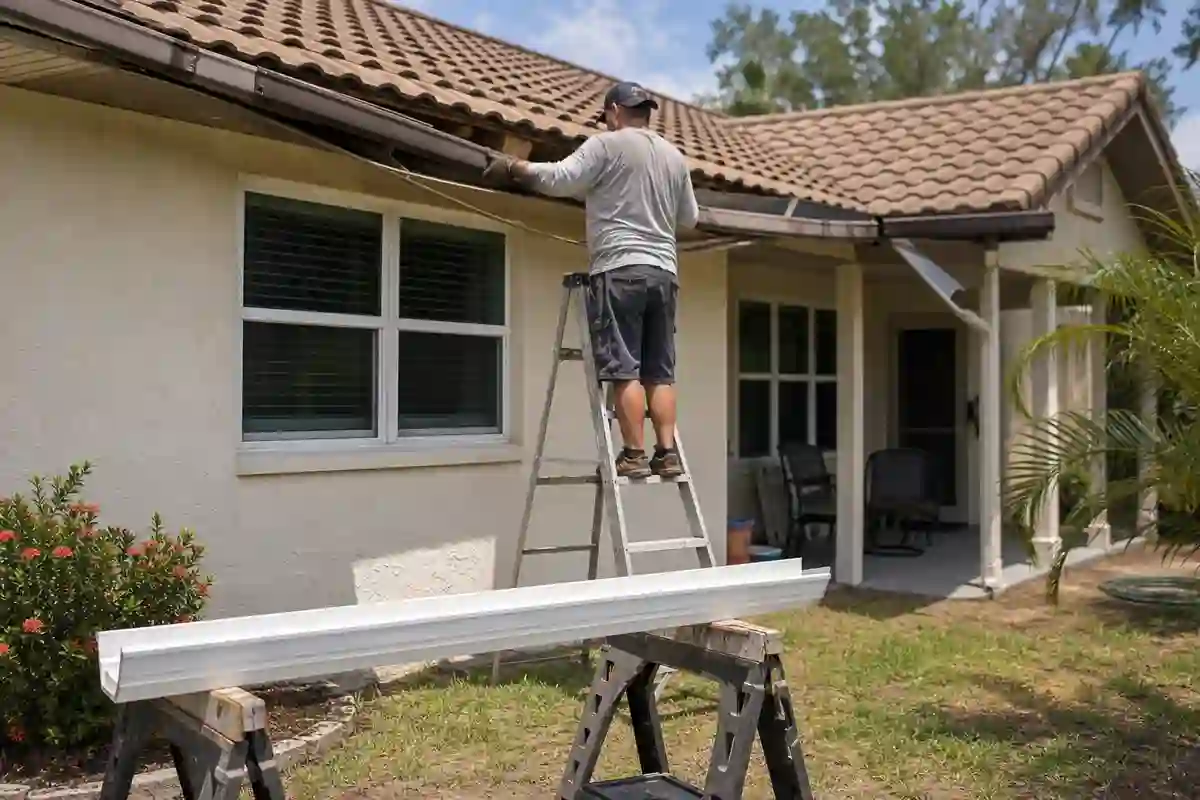
When full replacement is the right call, we remove the old gutters, inspect the fascia and drip edge behind them, and point out any wood that should be repaired before new gutters go up. New runs are then installed with correct slope, secure hangers, properly sealed corners, and downspouts placed for the way water actually moves across your lot.
What Happens to the Old Gutters
The old system comes down completely before the new one goes up. We detach runs, downspouts, and old hangers, and remove the old material from the property as part of the job. Exposed fascia is inspected at this stage — it is the one moment when the entire mounting surface is visible, and the right time to address any soft or damaged sections.
Choosing the New System
Most replacements we install are seamless aluminum systems, which remove the leaky mid-run joints that likely plagued the old sectional gutters. Sizing is chosen for the roof area each run serves, and downspouts are planned for actual runoff volume rather than simply copied from the old layout.
If debris was part of what wore the old system out, replacement is also the natural time to add gutter guards. And if overflow was concentrated in one area, we look at whether an additional downspout or a larger outlet solves it for good.
Jacksonville-Area Replacement Considerations
In established neighborhoods with mature trees, we pay special attention to what accumulated debris did to the old system and the wood behind it. Near the coast, we check for corrosion patterns that salt air creates and plan materials accordingly. On newer homes in St. Johns and Nocatee, replacement sometimes means upgrading builder-grade gutters that were undersized for the roofline from the start.
Common Replacement Mistakes to Avoid
The most common mistake is reinstalling the same flawed layout: same downspout count, same outlet locations, same undersized gutters. A replacement that copies a bad plan inherits the same problems. The second is mounting new gutters over damaged fascia, which guarantees sagging within a few seasons. The third is ignoring ground-level discharge, so the new system dumps water in the same problematic spots as the old one.
Why Choose Us for Gutter Replacement
We approach replacement as a chance to fix the system, not just the metal. That means honest assessment of what can stay, careful removal and fascia inspection, and a new layout planned around runoff volume, slope, and discharge. You get a clear explanation of what we recommend and why before any work begins.
Gutter Replacement Across Our Service Area
Gutter Installation Jacksonville FL is proud to serve Jacksonville and the surrounding communities. We provide gutter replacement for homeowners in:
- Gutter installation in St. Johns
- Gutter installation in Fruit Cove
- Gutter installation in Mandarin
- Gutter installation in Ponte Vedra Beach
- Gutter installation in Nocatee
- Gutter installation in Jacksonville Beach
- Gutter installation in Riverside/Avondale
- Gutter installation in San Marco
- Gutter installation in Southside
- Gutter installation in Arlington
- Gutter installation in Orange Park
- Gutter installation in Julington Creek
Planning Your Gutter Project Cost
Project cost depends on the roofline, linear footage, home height, materials, downspouts, access, and whether old gutters or fascia need attention. For a homeowner-focused explanation of those variables, read our gutter replacement cost guide.
Related Gutter Services
- Gutter Installation — Complete gutter systems planned around your roofline, runoff volume, and where water should discharge.
- Seamless Gutter Installation — Custom seamless aluminum runs with fewer joints, a cleaner roofline, and fewer potential leak points.
- Gutter Guard Installation — Guards that help keep leaves, pine needles, and roof debris out of your gutters between cleanings.
- Downspout Installation — Correctly sized and placed downspouts that carry collected roof water to sensible discharge points.
Gutter Replacement FAQs
What are the signs my gutters need replacement rather than repair?
Widespread issues are the tell: leaking at multiple seams, sagging in several sections, fasteners pulling loose, and overflow during ordinary rain. If problems are isolated to one run or one corner, a targeted repair may be enough. We assess the whole system and tell you honestly which situation you are in.
What happens to my old gutters during replacement?
We remove the old gutters, downspouts, and hangers completely and haul the material away as part of the job. With the old system down, we inspect the fascia behind it and flag any soft or damaged wood before the new gutters are mounted.
Why are my gutters sagging?
Sagging usually means the hangers have failed, were spaced too far apart, or are mounted to softened fascia. Debris and standing water add weight that makes it worse. Once a run loses its slope, water pools, the weight grows, and the sag accelerates — which is why sagging sections rarely recover on their own.
Why does water run behind my gutters?
Water behind the gutter usually points to a gap between the gutter and the drip edge, a gutter that has pulled away from the fascia, or runoff overshooting a shallow gutter on a steep roof section. Left alone, it soaks the fascia and can stain siding below. The fix depends on the cause, which we identify during the estimate.
Can I replace just one section of my gutters?
Sometimes. If the rest of the system is in solid condition, replacing a single damaged run or adding a downspout can be the right call. We will tell you when a partial replacement makes sense and when it would just postpone a full one.
How long does gutter replacement take?
Most single-family replacements are completed in a day, including removal of the old system. Larger homes, complex rooflines, and fascia repairs can extend the schedule. We give you a realistic timeframe after reviewing the property.
Contact Us Today for a Free Estimate
Ready to improve drainage around your Jacksonville home? Tell us what you need and we will help you plan the next step.
Free — no obligations